














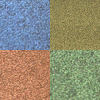
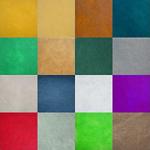
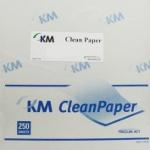
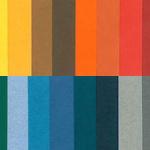
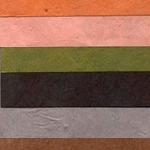
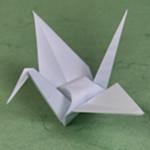
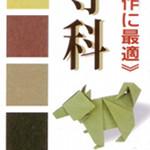
| Weight (gsm) | Sizes | Color Palette | Texture | Aging |
|---|---|---|---|---|
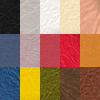
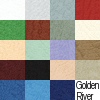
| 40 | 10cm, 15cm, 20cm, A4, 10x100cm | 11 | Smooth | Unknown |
| Wear and Tear | Memory | Forgiveness | Tensile Strength | Bending Restistance |
|---|---|---|---|---|
| 4 / 10 | 9 to 10 / 10 | 6 / 10 | 8 / 10 | 4 / 10 |
| Classic | Action | Tess. | Complex | Modular | 3D | Wet Folding |
|---|---|---|---|---|---|---|
| n/a | 8.5 / 10 | n/a | n/a | 9.5 / 10 | n/a | n/a |
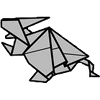
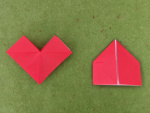
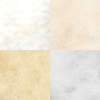
One aspect of paper that is of particular interest to tessellators is its translucency, so finding a translucent paper to test was high on my list. One such paper is Glassine.
Glassine is made exclusively from cellulose. It is very thin, smooth, and is both air- and water-resistant. It is translucent unless dyes are added to color it or make it opaque. After pressing and drying, the paper is passed through a stack of alternating steel and fiber-covered rolls (called supercalendering) that flatten the paper fibers. This process produces a firm, yet very thin paper with a glossy effect.
Color is added in the pulp stage. The colorless version is food-safe, grease-proof, pH-neutral, as well as chlorine- and acid-free. This is why glassine is often used for food packaging and storing films and documents.
as selected by Sara Adams
Liliana Badillo interviewed me in January 2013 via email for Mini Neo. The interview was translated into Spanish and published in Mini Neo Issue Number 14. The English version of the interview (i.e. untranslated) just also got published with OrigamiUSA's TheFold. Perhaps you'll enjoy the read: http://origamiusa.org/thefold/article/interview-sara-adams-promoting-ori...
-- Sara
| Weight (gsm) | Sizes | Color Palette | Texture | Aging |
|---|---|---|---|---|
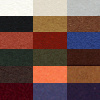
| 27 | 40cm;60cm | 10 | Hand-made | Many years |
| Wear and Tear | Memory | Forgiveness | Tensile Strength | Bending Restistance |
|---|---|---|---|---|
| 9 / 10 | 7 to 8 / 10 | 8 / 10 | 10 / 10 | 5 / 10 |
| Classic | Action | Tess. | Complex | Modular | 3D | Wet Folding |
|---|---|---|---|---|---|---|
| n/a | n/a | n/a | 9 / 10 | n/a | 9 / 10 | n/a |
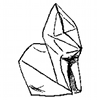
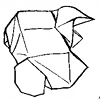
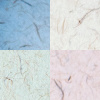
Unryu is absolutely beautiful paper, there is no doubt about it. It has long fibers that swim majestically in all directions, a huge palette of colors, translucent appeal, and a perfect wow-effect.
But the moment I got my package and opened it, I knew I was in trouble. Unryu is soft, seems to be too arrogant to hold a crease, or to remember it - hence totally unfit to origami - unless you treat it nicely.
There are multiple ways you can treat such soft paper to make it origami-capable. You can coat it with Methyl Cellulose or paint it with acrylic color. You can make tissue foil by gluing tissue paper, such as Unryu, to kitchen foil, or even make a foil sandwich, by gluing tissue paper to both sides of the aluminum foil. You can use another thin paper, like Onion Skin paper, and glue them together. And finally, you can fight your way through the natural stuff and work with it as it is.
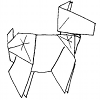
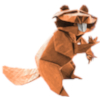
Knowing all that, we realized reviewing Unryu would have to be done differently. No one buys Unryu to cut it to 30 small squares for a modular, nor would they fold a crane or a barking dog from it. So this review will be dedicated to complex and 3D animal models only, the main reason people will buy this paper. And we will test such models on Unryu after treating it in different ways.
Update Feb 1st 2013: Thanks so much for the tons of supportive messages. I haven't had the time to answer any yet, but have read all of them and appreciate your kind words greatly. I'll answer as I find the time, but right now time is short. Especially the last days Felix was much worse again, but he's getting better now.